I have been learning new things recently—things related to jobs and computers and the importance of backslashes—and this experience has led me to question whether I've always found putting new things into my brain somewhat awkward and uncomfortable.
I have a tendency, when something is both of those things, to think: "It has NEVER been like this before. My brain was once resilient and responsive and young!" But, of course, when I was 12, I thought pretty much exactly the same thing.
I feel I should be more accomplished and talking about this in mellifluous tones on public radio when I say: learning is an odd and nebulous process. (The fact that I was briefly convinced the word I wanted there was "effluvious" is one of the reasons I'm unlikely ever to turn up on public radio.) It will never stop being strange to me that I am often unaware of the moment when my brain stops viewing a piece of new information as a foreign invader—and decides it's prepared to remember it in the future without conspicuous effort.
It will also never stop being strange to me that the feeling of putting something new into my brain is an actual distinct feeling: I might as well have a giant cartoon head, which I open up and physically stuff information into.
But eventually, my brain rearranges itself, and I forget how difficult it was at first to remember something. Brains are wily and unbiddable sons of bitches.
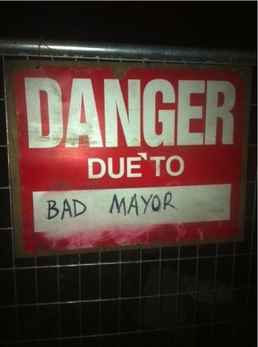 I've used it once before, but this photo, taken about a year ago by Alex Panther, continues to be good. 1. Rob Ford announces he will run for mayor of Toronto.
Mostly Unbothered-ness
I am unbothered, because there's no way he will be elected. He will likely be aggressively objectionable, but then he will not be elected, and I will go back to not thinking about him until he says something else about "Orientals."
2. Rob Ford wins the election and becomes mayor of Toronto.
IDONOTUNDERSTANDATALLIAMSOCONFUSED
3. Rob Ford is mayor; Rob Ford faces legal challenges; Rob Ford remains mayor.
Hope and also Unease and then Ambivalence
I am filled with hope, because maybe Ford will have to stop being mayor; I am filled with unease, because if it's the courts that bring about his ousting, maybe that will just make some people like him more and then he'll just be elected again. So when he ends up not having to stop being mayor, I'm kind of relieved, but also deflated—because after all, he is still mayor.
4. Crack video. Mayor in crack video. Mayor a racist and a homophobe in a video OF CRACK.
Mild shock and also Relief
Crack is a bit of a surprise, but the suggestion that Rob Ford had issues with substance abuse, making judgments about things, and being a racist and a homophobe does not shock me. I am relieved that my profound misgivings about him have been entirely validated and wait for the inevitable scandal to consume and de-mayor him.
5. Inevitable scandal weirdly does not seem to catch on so much. Rob Ford remains mayor.
Confusion and then Sense of Unreality
I don't understand why this doesn't seem to have traction. As the weeks go by, a weird sort of mayor-not-at-all-linked-to-crack-video normalcy sets it, and I have to regularly remind myself that I did not invent the whole thing in a state of electoral despair.
6. I thought about figuring out how to embed gifs, and then embedding a gif of either (1) the Scanners head explosion, or (2) the Raiders head melting. Then I worried they were both overused, if ENTIRELY APPROPRIATE, and I considered going with this still from WarGames:
But then I worried that that was both too serious (thermonuclear war) and too flippant ('80s movie reference to deal with genuinely disturbing state of affairs that has already harmed a lot of people). But I decided to include it anyway, so you could have a point of reference for my discussion of deciding against doing so.
7. Scandal DOES register this time, with every person and place that exists.
Rob Ford remains mayor. Council strips him of various powers. He remains mayor. New poll finds his support at 42 per cent. Even next year, he might still be mayor.
IDONOTUNDERSTANDATALLIAMSOCONFUSED
 "Boo! Boo! Rubbish! Filth! Slime! Muck! Boo! Boo! Boo!" Watching the news has, for a while now, felt kind of like swimming in a vat of raw sewage filled with empty liquor bottles and rubber chickens. The reason I don't feel even more as if I want to remove my brain and put it in some bleach, and then some vinegar, and then something else associated with a vigorous cleaning action, is that I have not been swimming in this sewage vat alone.
I would like to take a moment to consider CP24—and, more specifically, Katie Simpson. The Star has received a lot of attention and credit for its coverage of Rob Ford, and I have no issues with that whatsoever. But I do think that Katie Simpson should also be commended, and appreciated, and generally celebrated. It could well be that she's a nasty, vindictive, underhanded type of individual. Perhaps Doug Ford said she was "vicious" and that "foam comes out of her mouth" because he is right and not because he is a nasty, vindictive, underhanded type of individual. But I don't care. I have decided she is even-handed, resourceful, quick-thinking, and incredibly patient. And I would like to continue believing she is all of those things because doing so calms and reassures me.
And I like Stephanie Smyth, too (although sometimes I worry she seems sad). And Ann Rohmer, obviously (show me someone who does not like Ann Rohmer, and I WILL SHOW YOU A MONSTER). And I'm ambivalent about Stephen LeDrew, whose affable bow-tie-edness is not quite enough to make me overlook the fact that one time he wore loafers with no socks, and a whole lot of other times he's been an apologist for people I don't think should be apologized for.So if you know that Katie Simpson is a deeply selfish and unprincipled monster, please don't tell me—liking her helps offset (a bit) how much I don't like almost everyone else.
I would now like to do what I often seem to do when confronted by important events that affect a lot of people: think and talk about myself.
By now, pretty much everyone knows that Toronto's mayor is belligerent, deluded, crack-using, defiant, in serious danger of doing harm to himself or others, and surrounded by crazy people who love him in a way that encourages him to be all those things I just mentioned.
And watching the minute-by-minute updates about the public breakdown of this person has made me feel pretty conflicted and disgusted with myself.
The first reason this experience has made me disgusted with myself is by no means a surprising or unusual one: I find myself occasionally exhilarated by the sense that NEWS IS HAPPENING, and IT IS CONSISTENTLY CRAZY NEWS, and then I consider the fact that the news that is happening relates to a real person and a real city and involves other real people—and feel crappy for all my prurient interest and anticipation.
The second reason is that this experience has given me an intense and sustained sense of Toronto community. I know that pretty much everyone is thinking about the same thing at the same time. And I know that—with the exception of some people who want to vote for the regular guy (you know, the one you'd feel comfortable doing some crack with while threatening to murder people) and some people who happen to be related to this regular guy and are maybe the worst people ever—pretty much everyone is thinking the same things about that thing. I don't know that I've ever been so powerfully aware of Toronto as a single consciousness, consciously focused on one single subject.
And I feel gross and uncomfortable that it is this subject that has made me feel this way. People don't tend to, though, en masse and by the millions, spontaneously think about the benefits of light rail transit; people rarely, all together and at one and the same time, consider the benefits of affordable housing.
But I suspect that actively enjoying—rather than simply finding solace in--the sense of community that has sprung out of such a profoundly distressing situation is probably neither honourable nor healthy. Getting enjoyment out of something that causes general distress isn't usually awesome.
Whenever I find myself too inclined to feel gratified by the knowledge that I am right now agreeing with millions and millions of my fellow Torontonians about something, I remind myself again that actual people are involved in this, that an actual city is involved in this, and that one of the reasons it's so difficult to find the right tone to take with this is that it is both completely outlandish and increasingly disturbing—and then I become overwhelmed by all that and want to remind myself that I'm not alone and that a lot of other people feel the same way...and the whole thing starts all over again.
 Rob Ford on the left; Frank Di Giorgio on the right. And in the middle, the Consul General of Italy, who is probably a very nice man. So obviously today's news featured a BOMBSHELL announcement. No, not that one about Rob Ford and how he's (a) a crack smoker, (b) a racist, (c) a homophobe, (d) a liar, and (e) the occasional employer of an occasional driver who perhaps came by his interest in extortion honestly by way of his experiences with drug trafficking and death-threat-issuing.
No—the bombshell announcement came courtesy of Frank Di Giorgio (Ward 12, York South-Weston): he stated that he is standing by his crack-smoking, racist, homophobic, lying, occasional-driver/ frequent-criminal–employing mayor. He told Katie Simpson of CP24 that he does not think the mayor should step down, and that he hopes councillors can focus on business as usual—tomorrow, for example, there's the matter of the new waste-management budget, and Di Giorgio hopes that all that mayoral crack-smoking and possible extortion involvement doesn't divert any attention away from that.
LET US MAINTAIN OUR SENSE OF PROPORTION. As Di Giorgio said when asked about the mayor's crack-smoking, "Maybe he doesn't do it every day." Can we not manage to schedule important city business for the days the mayor is NOT SMOKING CRACK? Can we not make some allowances for a mayor who only smokes crack ONCE IN A WHILE? Do we really need a mayor who smokes NO CRACK AT ALL?
I am so glad that even if those Pollyannas who demand mayors not EVER be high on crack triumph and Rob Ford leaves office, there will still be a voice of reason at city hall.
There is going to be a Murder, She Wrote reboot.
If I had my own internet, there would certainly have been talk about Affleck-Batman, but that talk would now, obviously, be eclipsed by talk about Spencer-Fletcher.
Most people are focusing on the fact that this reboot demonstrates that NBC is the network version of the saddest, most desperate, most unimaginative person who has ever existed.
Few people are discussing the fact that this re-envisioning of the long-running HIT SERIES might as well just be called Sort of Like Castle: With Octavia Spencer Instead of Nathan Fillion for all the resemblance it bears to the original. This isn't being discussed much (or at least not with much intensity) because the original show was not very good and most of the people who really liked it are now long dead—but damn it, I have proved on a mystifyingly regular basis that I love it deeply (it has its own category in this blog), and I would argue that even the most terrible shows are about things and have actors in them and so can be disrespected when networks remake them and change them so that they become unrecognizable.
If there's one thing everyone knows about Murder, She Wrote, it's that J.B. Fletcher was old, and old people liked her (that might actually be two things). Angela Lansbury was 59 when she took on the role in 1984. And J.B. Fletcher was a retired school-teacher and widow who expected to sink into quiet obscurity in Cabot Cove, Maine, but instead became a famous mystery author and international super-sleuth. It's the whole point of the show: this woman is (a) old, (b) a widow, and (c) living in Maine (although in later seasons she does keep an apartment in New York). She has already lived a whole life, and she never expected to have a whole other life. I would be willing to wager that old people liked this show not only because Lansbury was also old, but also because it suggested it's possible to have a second good and fulfilling life after your first one has ended.
I have absolutely nothing against Octavia Spencer, except for the fact that casting her as J.B. Fletcher is like casting Matt Damon as Matlock (Spencer and Damon are the same age). I also have nothing against hospital administrators (that's apparently what the new J.B. is going to be), but Jessica DID NOT HAVE A JOB ANYMORE, BECAUSE SHE WAS SO OLD. I still haven't heard anything about where this will be set—but if she's now young and a hospital administrator, I'm betting she won't be busy being both of those things in some small town in Maine. So if this show is about the crime-solving adventures of a young-ish hospital administrator/self-published author in some big city somewhere, it could really be called almost anything else. It could be called Remington Steele, for God's sake.
Oh, wait. NBC couldn't call it Remington Steele—BECAUSE NBC IS ALREADY REMAKING THAT SHOW, TOO.
UPDATED YET AGAIN!
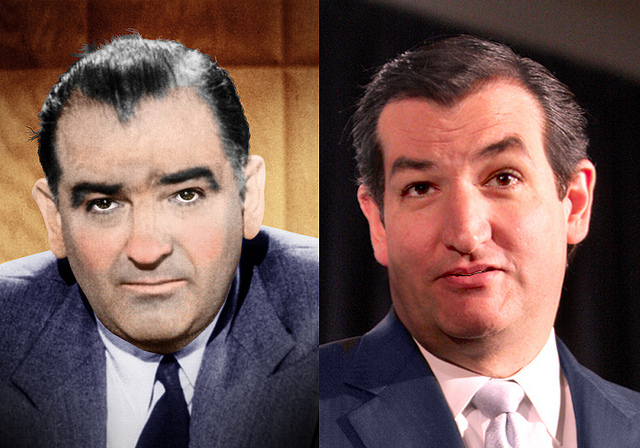
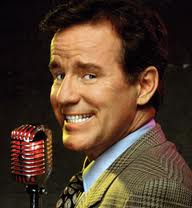
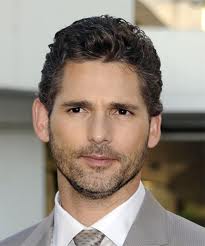
I am completely obsessed with Ted Cruz. Not because of what he is (which is batshit crazy) or what he does (all of which is batshit crazy). And not because he is a strange, awful man who is always getting up to large, awful things. No—I am obsessed with Ted Cruz because I know he looks like someone or something, but I cannot figure out which someone or something he looks like.
So I turned to the internet, because I figured the internet had probably already done some hard thinking about who or what Cruz looks like. And I was right. It offered the following possibilities:
1) Joe McCarthy
2) Quentin Tarantino 3) Bill Murray 4) Punch But not one of those was quite right. So to this Very Important List, I added the following:
5) Phil Hartman AS Bill McNeil (the photo comparison isn't great, but there was an eyebrowed smarminess in Bill McNeil that I also see in Cruz) 6) Eric Bana (I feel I might have a hitherto unacknowledged animus against Eric Bana) 7. One of the creepy puppets from Mr. Rogers' Neighbourhood (interestingly enough, this puppet is also said to resemble Quentin Tarantino, who is, of course, #2 on this list) STILL, not one of these is exactly right.
It's someone smug and puffy and disingenuous looking—someone who might have appeared wearing eye makeup and looking intensely up at the ceiling in a headshot from the 1940s. I googled "sad-eyed, old-timey comedian," but the search came back only with photos of (a) Charlie Chaplin, (b) babies, (c) underdressed celebrities, and (d) people holding banjoes.
Or maybe it's something bulbous and squinty moulded out of glistening beige plastic.
Regardless, he's kind of Canadian, so I'm pretty happy and proud.
Reader input begins now.
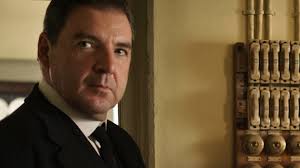
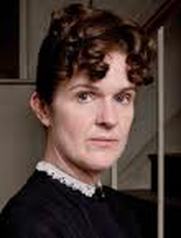
8) Downton Abbey's Bates (courtesy of Tim D.)
Although I now think he might also look like O'Brien. 9) Modern-day Boy George (courtesy of Sean B.)
There's certainly a resemblance. Also, this gave me a chance to use my favourite photo of Ted Cruz of all time again.
If I had Photoshop, I'd probably give that photo a fedora and some blue eye-makeup. Of course, if I had Photoshop, I'd probably give a whole lot of photos fedoras and blue eye-makeup.
10. Richard III (courtesy of Neil M.; originally from Private Eye)
Someone give Ted Cruz a crown. And a hunch. And a Marc Bolan haircut.
There are some weeks that are really sucky. Not tragic, or disastrous, or genuinely traumatizing or sympathy-deserving—just sucky. But SO SUCKY that it's hard not to be consumed by suck and to want to talk to people about that while ignoring the fact that everything you are saying is appallingly tedious.
First, my computer died. It faltered; it faded; I frantically scoured message boards for mentions of ever more obscure and random combinations of keys I could hold down at the same time on my keyboard; I erased and reinstalled the operating system. After I did that last thing, it worked for another 12 hours before collapsing even more dramatically and conclusively.
I took it to the store. The hard-drive had been "compromised." The battery had also been "compromised." So, after various complications and a number of days, they replaced both. And I reminded myself that I had good and reliable back-ups of all of my data, and that nothing ever goes wrong with that kind of thing.
And then something went wrong, and the back-ups weren't entirely accessible, and I had to move little files one by one over the course of many hours and scour my apartment for those software installation CDs I KNEW I'd put in a box with all those adaptors I still have for devices I no longer own.
And then my only remaining sharp knife snapped in two when I was trying to cut a slice of comfort Cheddar.
And then I turned around to gaze out my window in a meditative fashion, and noticed some strange, dark, giant, cobwebby things hanging from the ceiling of my balcony. "What could those be?" I wondered. "I am willing to bet they are something delightful." And I drew closer and discovered that (1) a spider had been engaged in constructing a massive series of webs out there, and (2) thousands and thousands and thousands of tiny flies had rushed over to kills themselves in it. Hanging from the ceiling of my balcony were thousands and thousands and thousands of dead flies.
After disposing of them and indulging in some small noises of distress, I washed my hands in the bathroom and thought something extremely dramatic and self-indulgent like "My God, everything is turning to shit." And AT THAT VERY MOMENT, my towel rack fell off the wall.
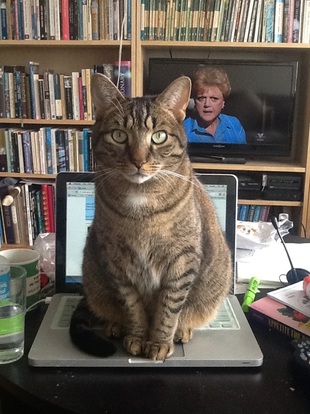
At that point, I retreated to the couch and did what I always do when I'm feeling discouraged (keep company with some Bridge Mixture). And my trusty cat, George, who enjoys sitting on my computer and staring at me, came over to my computer and sat on it— and in doing so, not only opened iTunes, but also pressed play on the first song in my library, which is, obviously, Aimee Mann's "One (is the Loneliest Number)."
And that brought about the magical suck-to-farce transformation, and so I did what I always do when I'm overwhelmed by no longer feeling discouraged —keep company with some Bridge Mixture.
I am so thrilled by this. Not because I have little respect for lady writers, or because I think there are such things as "lady writers," or because I think as many young people as possible should be introduced to the works of Henry Miller (although I do, because it's never too early to learn that writers can both write about and be full of shit. I have more to say about hating him right here).And not because it can be so tiring to confront and rebut complex and layered arguments that coming across something this hilariously embarrassing and stupid is kind of refreshing.No—I am thrilled because I've been randomly kind of mean about David Gilmour for years, and now I know I was totally justified.At some point, I will write a long and rambling and bile-filled and tiresome screed about my issues with Canadian Culture and Canadian Writing and the terrible Canadian extras on television shows who make you realize those shows were filmed in Vancouver. For now, I will simply say that for no apparent reason—I don't know him, and I haven't read much by him—David Gilmour became for me representative of all the overrated (in Canada), jowly, self-satisfied, probably-all-hands-y Canadian authors I'm familiar with only because I accidentally watched Imprint once in the '90s. And my fits of being mean to him are invariably prefaced with..."What's that guy's name again? You know, the one who wrote that book about wearing a blazer and jeans and wanting to have sex with some teenager on the street?"I don't care so much about the fact that he turns up in the Globe-- if I cared about that, I'd be busy writing a searingly honest and breathtakingly erotic semi-autobiographical novel about wearing a sport coat and jeans-- but damn it if it doesn't bother me that he's paid to teach undergraduates. I know dozens and dozens of decent people with PhDs who are not stupid and could really use the money. Oh, and his whole "unapologetic misogyny that was considered edgy in underwhelming academic novels from the '70s" bit is probably not the best thing for budding brains already forced to deal with how stupid most things are.
And why are there so many comma splices in this article? I'd be worried David Gilmour was helping to create a generation of comma-splicing, women-denigrating, "I am Henry Miller, and my cock froths pustulant, proud outrage at the shit-lathered moon"-ing half-wits if I wasn't convinced most people have never heard of him at all.
One of the great things about the internet is that you can google things like "I feel ambivalent about Steven Moffatt" or "Why does my cat watch me in the shower" and immediately discover that there are lots of people who have both ambivalent feelings about Steven Moffatt and questions about why their cats want to watch them in the shower.
So I shouldn't really have been surprised to discover that I am not the only one to have feelings of various kinds about that guy from the Everest commercial.
If you're never seen the Everest commercial, that's likely because you're successful and employed and generally fulfilled—it plays only during the day on CP24. And if you have seen it, you probably also have opinions about things like Stephen LeDrew and how maybe it's ambition that matters most, really, because there are so many untalented successful people and so many really amazingly talented not-very-successful people who are busy watching daytime television while not being celebrated.
Here's the script (with details about the actual school taken out, because I don't care as much about them):
You're sitting on your couch, you're watching TV, and your life is passing you by. Keep procrastinating, over and over. Well, maybe I'll go to school next year. Maybe next semester. No, do it right now.
You spend all the day on the phone anyhow. Why don't you make a phone call that's going to help you in your future? All you gotta do is pick up the phone and make the call.
Why are you making it complicated? It's easy.
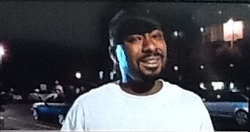
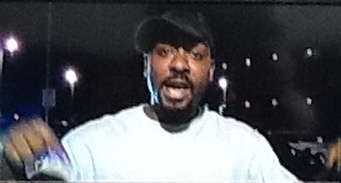
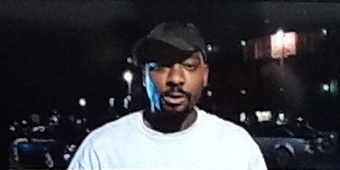
And here's the Everest guy himself: As I discovered after I googled "Everest commercial guy," he's inspired parody videos, stand-up comedy routines, and a Facebook page (with 6664 likes) called "The Black Guy from Everest College Commercials That Yell at You" that features the following description: "Regardless of how you feel about this angry man, this is the page for you if you know about him."
What amazes me the most about this commercial is not that it is the most demoralizing and effective commercial ever produced, or that it opens with a statement that could be made about me at any given time and still be incontrovertibly true—but that it has the power to inspire so many different emotions in me. Profound Shame
When I first saw it, I felt profound shame. I mean, I was GOING TO SCHOOL when I first saw it, but that didn't matter—my life WAS passing me by, and I knew it.
Gratitude
Then I started to kind of appreciate how passionate he was about the fact that I was wasting my life. He expected more of me. He knew I was capable of more. It's good to have someone like that around—someone who pushes you to do your best.
Appreciation
Later still, I found myself mostly marvelling at the fact that he is probably the greatest actor of all time. He is utterly convincing. If someone told me he was just some real guy on the street who happened to have strong opinions about my schooling and my laziness, I'd absolutely believe him.
If he were Canadian (which he is not), I would demand that we as a country honour him by immediately casting him in some show opposite Stephen LeDrew. And even though he's not Canadian, I think we should do so anyway, because there are probably dozens of people sitting in doctors' waiting rooms in Canada right now who'd love to see more from him.
|
















 RSS Feed